Avoid all travel
Avoid all travel to Burkina Faso due to the threat of terrorism, the risk of kidnapping, and the unstable political situation.

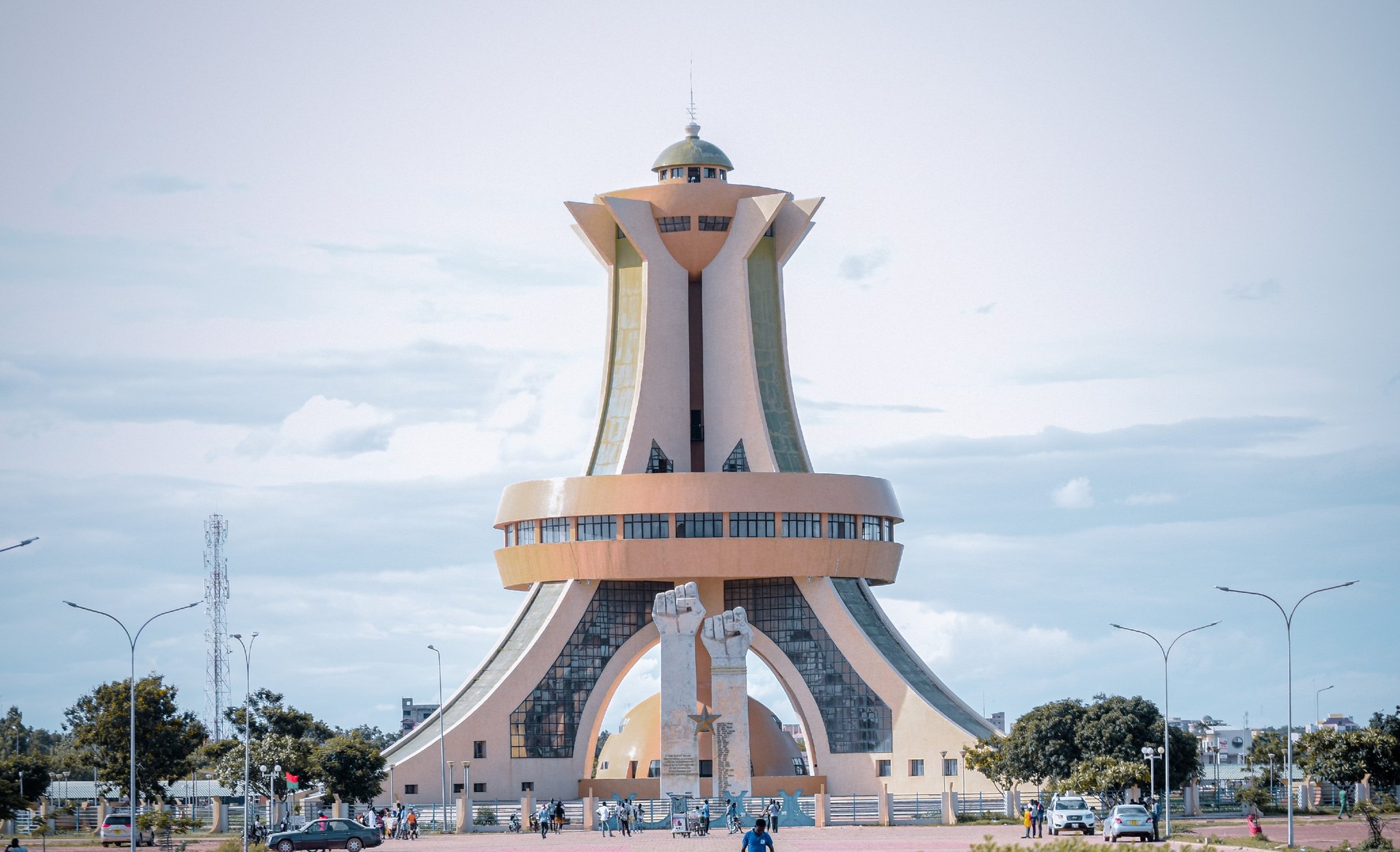
Ouagadougou is Burkina Faso's capital, a bustling cultural and economic hub.
Set your origin to compare Ouagadougou with where you live.
Ouagadougou experiences a hot semi-arid climate with a rainy season from June to September. Attractions include the Grand Mosque and National Museum.
Recent conditions and near-term forecast near Ouagadougou.
Typical monthly conditions based on long-term observed climate normals.
| Month | High (°C) | Low (°C) | Precipitation (mm) |
|---|---|---|---|
| Jan | 32°C | 16°C | 0 mm |
| Feb | 36°C | 19°C | 2 mm |
| Mar | 38°C | 23°C | 5 mm |
| Apr | 39°C | 26°C | 23 mm |
| May | 37°C | 26°C | 71 mm |
| Jun | 34°C | 24°C | 110 mm |
| Jul | 32°C | 22°C | 176 mm |
| Aug | 31°C | 22°C | 227 mm |
| Sep | 32°C | 22°C | 139 mm |
| Oct | 35°C | 23°C | 33 mm |
| Nov | 36°C | 19°C | 1 mm |
| Dec | 34°C | 17°C | 1 mm |
Connectivity tiers and measured network speeds are provided for comparison.
3 source-backed travel advisories are available for Burkina Faso.
Avoid all travel
Avoid all travel to Burkina Faso due to the threat of terrorism, the risk of kidnapping, and the unstable political situation.
FCDO advises against all travel
Your travel insurance could be invalidated if you travel against advice from the Foreign, Commonwealth & Development Office (FCDO). FCDO advises against all travel to Burkina Faso. This is due to the threat of terrorist attacks and terrorist kidnap, and the unstable political situation in the country.
Do not travel
Do not travel to Burkina Faso for any reason due to crime, kidnapping, terrorism, and health. Do not travel to Burkina Faso for any reason. U.S. government employee travel restrictions U.S. government employees working in Burkina Faso are not allowed to travel outside of Ouagadougou due to safety risks. Personnel are discouraged from nighttime travel to the Balkiui and Rayongo (also known as Dayongo) neighborhoods of Ouagadougou’s Arrondissement 11. Americans in Burkina Faso are strongly advised to take the same precautions. Crime State of Emergency Violent crime is common throughout Burkina Faso. Crimes include kidnapping, assault, armed robbery, home invasion, and carjacking especially during local holidays and seasonal events. Roadblocks, including those set up by armed groups, occur throughout the country. In urban areas, police checkpoints may also be present, particularly at night. In addition, highways across the country are frequently the scene of attacks on government, civilian, and commercial targets. Local authorities may not recognize travelers with dual nationality. Your U.S. nationality may not be recognized if you are also a national of Burkina Faso. Review our information on Dual Nationality.
The Government of Burkina Faso has declared a state of emergency in the following territories:
Kidnapping The threat of kidnapping of Westerners by criminal or terrorist groups remains high throughout the region in Burkina Faso. This includes Ouagadougou and especially in the Sahel and East Regions. Extortion and kidnapping for ransom are big sources of financing for terrorist and criminal groups. Terrorism There is risk of terrorist violence, including terrorist attacks and other activity in Burkina Faso. Visit the U.S. Department of State's country reports on terrorism to learn more. Terrorist organizations continue to plan and conduct terrorist activities throughout Burkina Faso. Terrorists and armed groups target foreigners to kidnap for ransom.
Terrorists may attack without warning:
Health Medical services for routine and emergency procedures are limited. Health facilities are available in major cities. It may be harder to find adequate health care in rural areas.
Choose a scenario to get started: